
The topic explained
Feels good
- VOCABULARY Body language, body-related collocations and idioms, emotions, sounds, adverb + verb collocations
- I can use body-related collocations and idioms.
LESSON 1A VOCABULARY AND SPEAKING
What does your body language say about you?
ACTIVE VOCABULARY | Collocations
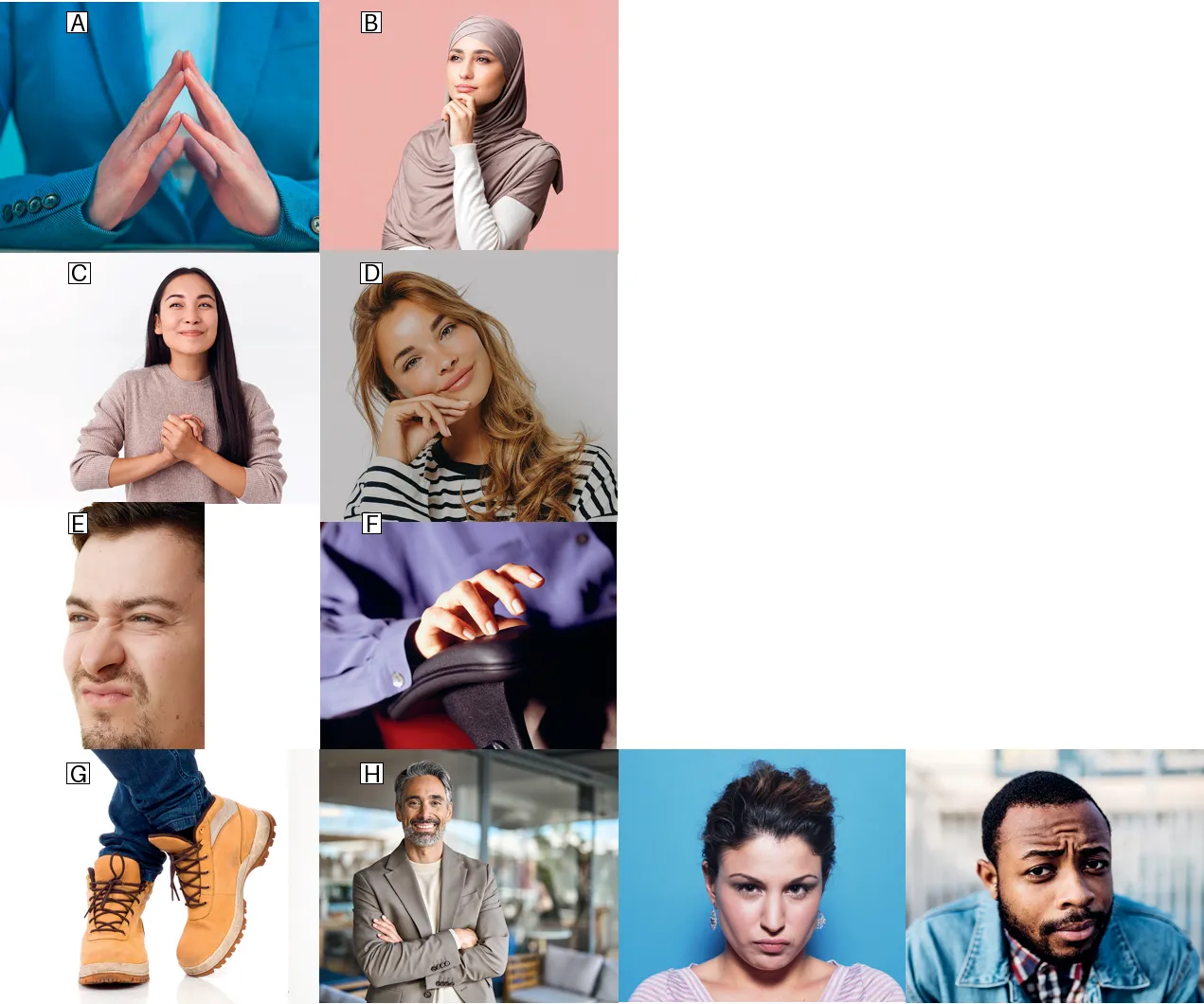
2 Read the survey on body language. Match the highlighted phrases with pictures A–J.
- fold your arms
- purse your lips
- furrow your brow
- drum your fingers
- rub your hands together
- tilt your head
- cross your ankles
- tent your fingers
- wrinkle your nose
- stroke your chin
Fill the survey with feelings
3 In pairs, complete the survey on page 4 with the words from the box. Then listen to a radio programme about body language and check.
- fold your arms when you are feeling ___ ?
- purse your lips when you are ___ ?
- furrow your brow when you are ___ ?
- drum your fingers when you are ___ ?
- rub your hands together when you are ___ ?
- tilt your head when you are ___ ?
- cross your ankles when you are ___ ?
- tent your fingers when you are ___ ?
- wrinkle your nose when you find something ___ ?
- stroke your chin when you are ___ ?
4 6.2 Listen to a phone-in programme. Write the numbers of the body language gestures from Exercise 2 that each person mentions.
Hala
Ali
Osama
Malak
Rashed
Which words go together, and how tightly?
- A common collocation is verb + noun (or verb + pronoun + noun), e.g., tilt your head.
- If we substituted the verb tilt for bend, it would not be correct although the verbs are synonymous.
Spot six body collocations in a blog
5 Study Active Vocabulary. Then read the blog entry and find six verb + pronoun + noun collocations related to body language.
6 Complete the collocations from the blog with the correct forms of the verbs from the box.
- I usually have to ___ my throat before speaking to an audience.
- My mum took my brother to the dentist because he ___ his teeth when he’s asleep.
- I asked Imad if he could help me and he simply ___ his shoulders.
- It’s so annoying when my sister ___ her hair in her fingers while she’s talking.
- I always know when it’s time for a haircut because I start needing to ___ my hair back from my face.

