تجاوز إلى المحتوى الرئيسي
تطبيق TawjihiAIحمّل التطبيق

⁦6.1⁩ Body Language

Textbook

From the prescribed Advanced English textbook
In this topic (4)

Feels good

  • VOCABULARY Body language, body-related collocations and idioms, emotions, sounds, adverb + verb collocations
  • I can use body-related collocations and idioms.

LESSON 1A VOCABULARY AND SPEAKING

What does your body language say about you?

Body language

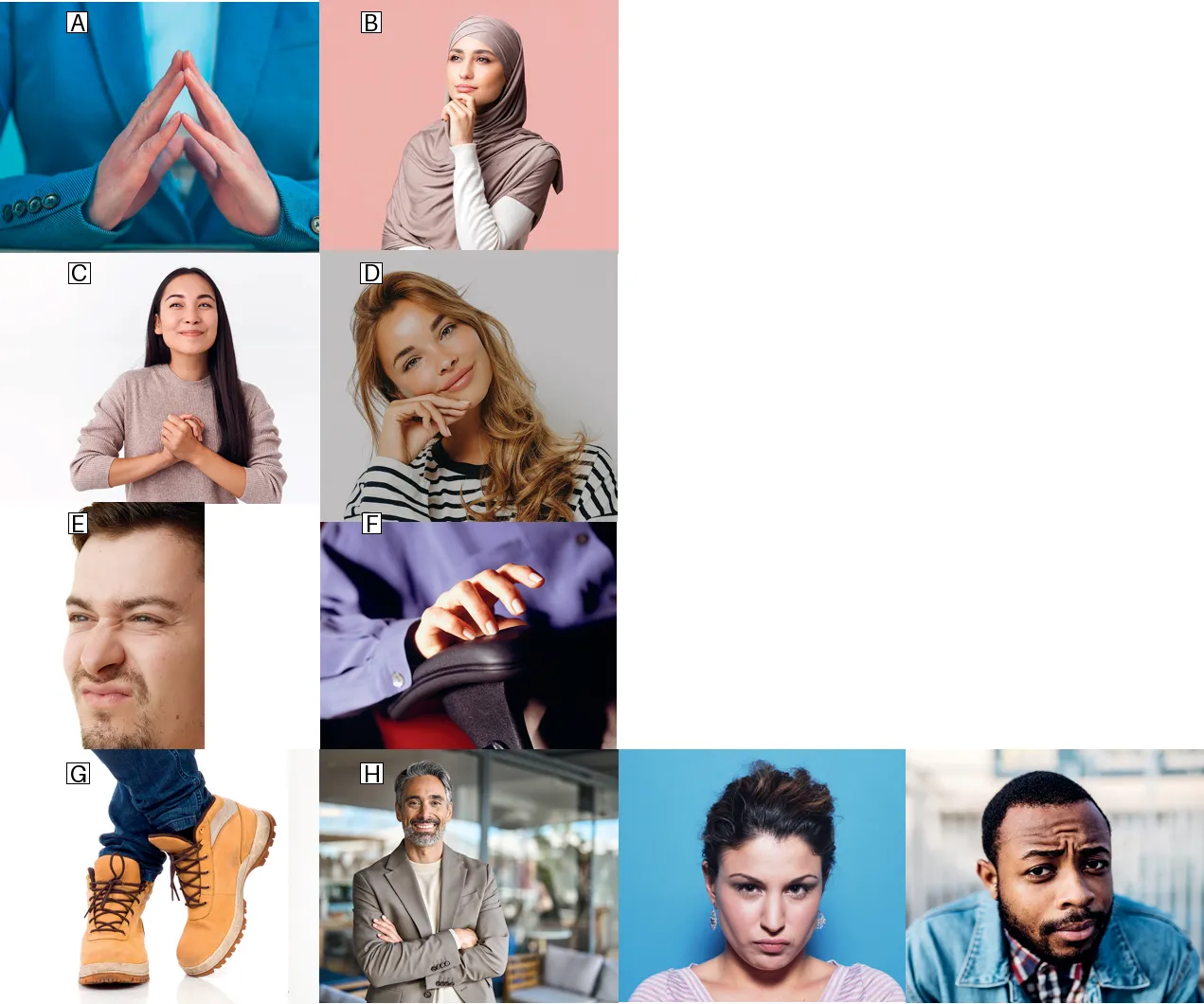
2 Read the survey on body language. Match the highlighted phrases with pictures A–J.

  1. fold your arms
  1. purse your lips
  1. furrow your brow
  1. drum your fingers
  1. rub your hands together
  1. tilt your head
  1. cross your ankles
  1. tent your fingers
  1. wrinkle your nose
  1. stroke your chin

Fill the survey with feelings

3 In pairs, complete the survey on page 4 with the words from the box. Then listen to a radio programme about body language and check.

  1. fold your arms when you are feeling ___ ?
  1. purse your lips when you are ___ ?
  1. furrow your brow when you are ___ ?
  1. drum your fingers when you are ___ ?
  1. rub your hands together when you are ___ ?
  1. tilt your head when you are ___ ?
  1. cross your ankles when you are ___ ?
  1. tent your fingers when you are ___ ?
  1. wrinkle your nose when you find something ___ ?
  1. stroke your chin when you are ___ ?

4 6.2 Listen to a phone-in programme. Write the numbers of the body language gestures from Exercise 2 that each person mentions.

Hala

Ali

Osama

Malak

Rashed

Body-related collocations

Which words go together, and how tightly?

  • A common collocation is verb + noun (or verb + pronoun + noun), e.g., tilt your head.
  • If we substituted the verb tilt for bend, it would not be correct although the verbs are synonymous.

Spot six body collocations in a blog

5 Study Active Vocabulary. Then read the blog entry and find six verb + pronoun + noun collocations related to body language.

6 Complete the collocations from the blog with the correct forms of the verbs from the box.

  1. I usually have to ___ my throat before speaking to an audience.
  1. My mum took my brother to the dentist because he ___ his teeth when he’s asleep.
  1. I asked Imad if he could help me and he simply ___ his shoulders.
  1. It’s so annoying when my sister ___ her hair in her fingers while she’s talking.
  1. I always know when it’s time for a haircut because I start needing to ___ my hair back from my face.

Do these gestures mean the same in Jordan?

Keep reading this subunit

Sign up free to read the rest of this subunit; we bring you back here.

  • LESSON 1A VOCABULARY AND SPEAKING
  • Body language
Start freeLog in

Last updated:

A preview of “Body Language” from the unit “Feels good” in Advanced English: 4 lesson sections, 14 definitions, 14 worked questions.

Source: National Center for Curriculum Development, 1A Vocabulary and Speaking: Body language, body-related collocations and idioms (pp.6-7)

More in this unit

Continue studying
