
LESSON 1A VOCABULARY AND SPEAKING
- Vocabulary: verbs of movement, travel and transport, idioms related to movement
- I can use verbs and idioms related to movement to talk about travelling.
How people move: hobbled, strode, surged, shuffled
For each sentence, choose the correct form of the verb of movement from the recording to complete it.
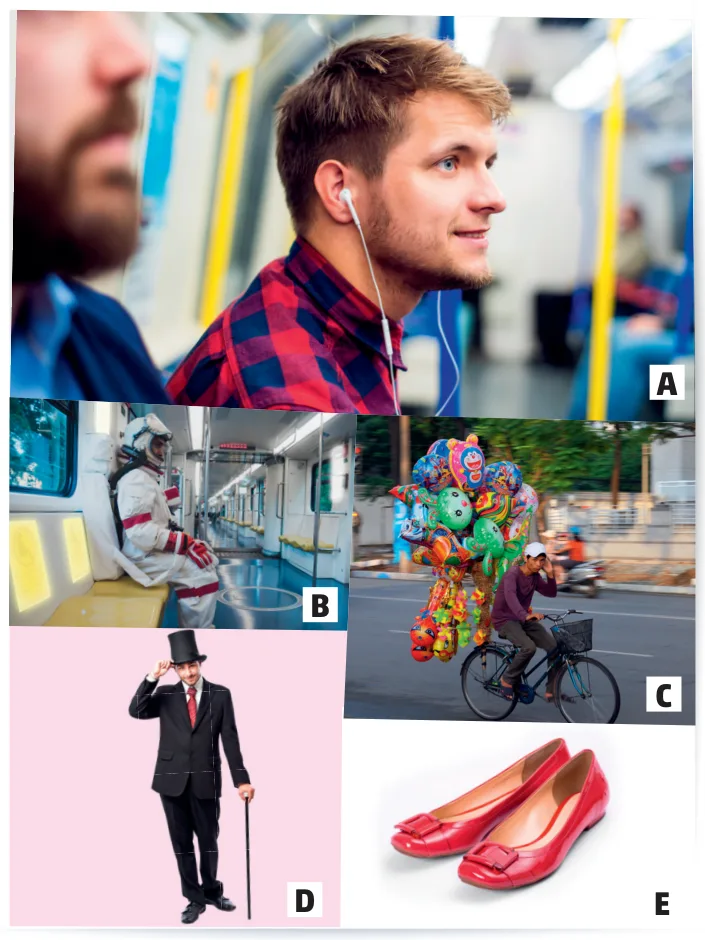
1 After hurting his ankle, the footballer ___ off the pitch to get some help.
a hobbled b strode c surged
2 As soon as the train arrived, the crowd ___ forward to try and get on it as quickly as possible.
a wobbled b shuffled c lurched
3 My brother and I lifted up the sofa with some difficulty and ___ across the room with it. It was far heavier than we expected.
a strode b staggered c surged
4 I woke my sister up when I came home and, while still half asleep, she ___ out of her bedroom and asked me where I had been.
a shuffled b strode c lurched
5 Angry at having to wait for so long, my father ___ up to the manager and demanded an explanation.
a shuffled b hobbled c strode
6 Mariam ___ into the room with a tray of tea and cake, terrified of dropping it on the expensive carpet.
a strode b wobbled c surged
7 Shortly after the fire alarm went off, the workers ___ out of the office looking very worried.
a surged b shuffled c wobbled
Movement idioms: complete the sentences
1 There are new roadworks in the town centre, and it is driving motorists up the _. So you’d better _ clear of the main junction for at least a week.
2 He encountered some obstacles while training to become a pilot. It wasn’t all ___ sailing.
3 It was because of Suha’s commitment that the new rail project was successful. She was the driving ___ behind it.
4 The airline used to have an excellent reputation, but in recent months, it’s been going ___ quickly.
5 Everyone’s furious about the increase in car parking fees. We’re all in the same _ – we have no other option. We know the city needs money, but no one likes to be taken for a _.