
The topic explained
Look at the way the three past tenses work together in the examples.
Period 3 / Language and vocabulary study
Completed or in progress? Compare the past tenses
1 Look at the examples. Then answer the questions below.
Each sentence pairs two past actions: compare how the verbs differ.
Past simple or past continuous: fill the gaps
Now choose the right past tense for each verb in brackets.
Tell your partner about yesterday after school
This is a speaking task: use the past tenses you have just practised.
The prefixes co- and mis-: complete the rules
4 Look at the examples. Then complete the rules.
The words in bold in the examples show what each prefix adds.
Add co- or mis- to the words in the box
Now build the missing word from the box, with the right prefix.
Period 4 / Language and vocabulary study
Left, were leaving or had left? Compare three tenses
1 Compare the examples. Then answer the question below.
One event stays the same; only the tense of the other verb changes.
Match the sentence beginnings with their endings
Read each beginning and find the ending that completes it.
Join two events in one sentence
3 Rewrite the sentences as single sentences, changing the tense of one verb and the order of the events if necessary. Use the word or phrase in brackets to join the two events.
The first item comes with the book’s own answer; try the rest yourself.
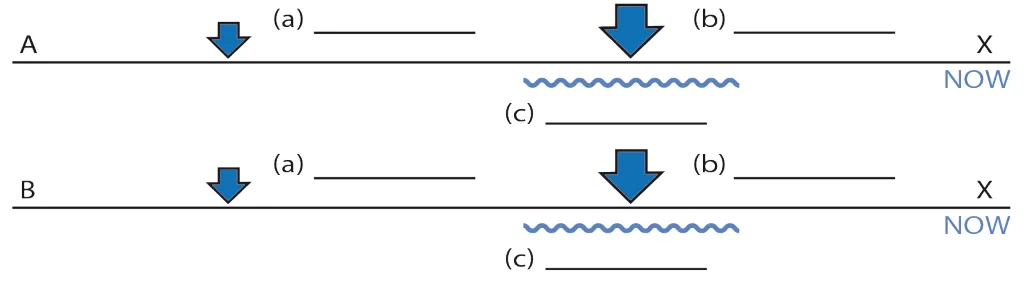
Three past tenses working together in one story
4 Look at the way the three past tenses work together in the examples. Then answer the question below.
The bold verbs in the examples are the ones to sort into main story and background.
Choose the correct past tense for each gap
Now use all three past tenses in the sentences.