
The topic explained
Digital perspectives
- I can use the passive to talk about actions.
The Internet of Things: what can your house, watch and car do?
Machines which gather, store and analyse data and can upload it to the Internet
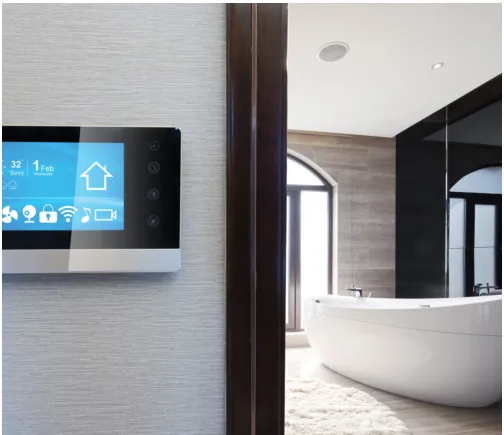
- SMART HOUSE
- Lights turn on and off automatically; front door opens with a digital fingerprint
- WEARABLES
- Smartwatch to measure activity, heart rate, etc.
- SECURITY
- Animal tracker
- VEHICLES
- Self-driving cars
- HEALTH
- Embedded heart rate and blood pressure sensors
Where does this lesson sit in the unit?
The passive
THINK BACK: spot the passive in the podcast
5 Look at the sentences in Exercise 4 again and answer the questions.
1 How do we form the passive in each of the sentences?
2 When we use the passive, are we focusing more on the action or on the person or thing doing the action?
3 Why is the ‘agent’ (the person or thing which causes the action) mentioned in two sentences?
The passive: form, agent and tenses
Why ‘was caused by a sensor malfunction’ and not ‘a sensor malfunction caused’?
Rewrite it: complete the second sentence
Unit 8 Digital perspectives
Smart-tech words: fill the gaps
Ten words from the box, then five gaps to fill.
Grammar Reference: Unit 8, Lesson 1A The passive
- We often use the passive to draw special attention to the agent by moving it to the end of the sentence.
- If we mention the agent, we use by.
- We don’t mention the agent if it is:
- obvious: A transmitter is worn on the body. (We know it is worn by a person.)
- unknown: Maher realised he had been followed. (We do not know who followed him.)
- unimportant: It will be shown at the ‘New Inventors’ show. (Who will show it is not important.)
| Tense | Example |
|---|---|
| Present Simple | A transmitter is worn on the body and digital messages are sent via the body’s electrical field. |
| Present Continuous | The invention is being welcomed by coffee-lovers everywhere. |
| Past Simple | ‘Fresh Brew’ was created by British coffee company ‘Beans R Us’. |
| Past Continuous | When we last heard, the ‘mirror’ was still being developed in a lab in France. |
| Present Perfect | Once a profile of your lifestyle has been built up … |
| Past Perfect | When Aisha realised she had been followed to her front door, she quickly phoned the police. |
| Modal verbs in passive | It can be switched on by text message. Music and games could be downloaded in seconds. It should not be used as protection from wild animals. |
| going to | It is going to be shown at the ‘New Inventors’ show next month. |
| will | A computer shows how your appearance will be affected in future. |
| The passive infinitive | There’s one drawback: it needs to be filled with coffee and water first. The company expects their invention to be launched next year. |
| The passive gerund | It’s a ‘must have’ if you are worried about being attacked. Nobody likes being told about their bad habits, especially by a computer! |
- Some verbs are usually followed by the infinitive and others by a gerund form:
- I require you to be on time.
- I don’t fancy going out tonight.
- When these verbs are used in the passive, the same verb patterns should be used:
- The humans who were required to be in the self-driving car …
- I don’t really fancy being monitored at all!
- The passive with two objects
- Some verbs can have two objects, and either object can become the subject in the passive – it depends where the writer wants to put the focus:
- It will show people the consequences of an unhealthy lifestyle.
- People will be shown the consequences of an unhealthy lifestyle.
- The consequences of an unhealthy lifestyle will be shown to people.
- Other verbs like this are: hand, offer, pay, promise, send, teach.


