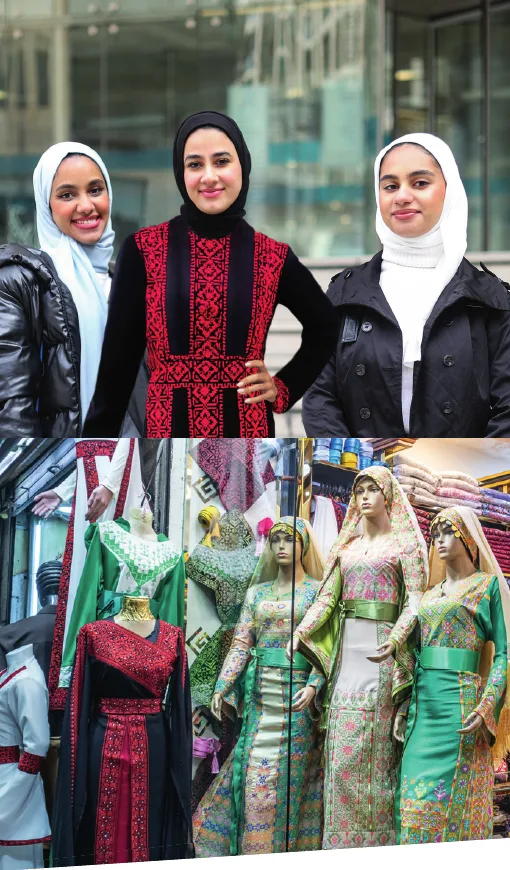
2 Match the underlined words in sentences 1–7 with rules a–g in the Grammar box. 1 □ She has won the first prize. 2 □ I work as a sales assistant. 3 □ The shop specialises in women’s clothes from Jordan. 4 □ Women wore long dresses all the time. 5 □ … the most important thing to know about clothing choices … 6 □ … is that it’s like a wheel. 7 □ I’m wearing a smart suit. The suit looks great.
3 1.11 Complete the gaps with ø (no article), a/an or the. Then listen and check. They say that 1 ø clothes say a lot about us. What about 2 _ people who don’t buy any clothes, like me? Today I’m wearing 3 old pair of jeans and 4 cotton top. 5 jeans were 6 present and 7 friend gave me 8 top because it was too small for her. She bought it in 9 Italy. Why don’t I buy new clothes? Well, shopping isn’t 10 worst thing in 11 world, but I care about 12 environment more than I care about 13 _ style.
Articles
a We use no article (ø) with plurals and uncountable nouns to talk about something/someone in general. b We use no article (ø) with continents, most countries and cities. c We use a/an to talk about a singular countable thing/person when it is one of many or one of a group; not the only one. d We use a/an with occupations. e We use the to talk about a specific thing/person. f We use the with superlatives, ordinal numbers, periods (e.g. the 1980s) and some countries (e.g. the UAE). g We use a/an when we mention something/someone for the first time and the when we mention it again.
Grammar Reference > page 67
4 1.12 PRONUNCIATION Listen to sentences 1–3 and say when and why the is pronounced /ðiː/. 1 The American jeans are cheaper than the European ones. 2 The hat was the oldest item in his wardrobe. 3 The expensive shoes are less comfortable than the cheap ones.
5 SPEAKING In pairs, discuss the question. Which clothes from the past do you like?
□ I can use articles to talk about general and specific things.