تجاوز إلى المحتوى الرئيسي
TawjihiAI: دراسة التوجيهيادرس وتدرّب من هاتفكحمّل التطبيق
Topics

⁦6.1⁩ Doing Right Vocabulary and Grammar

Textbook

From the English Language curriculum

In this topic (3)

I can use the first and second conditional to talk about possible and hypothetical situations.

06 Do the right thing

VOCABULARY: Truth and lies, communicating, relationships, conflicts and problems GRAMMAR: The first and the second conditionals, the zero conditional and alternatives to if LISTENING: A radio programme about being rich SPEAKING: Asking for, giving and reacting to advice READING: A story about finding money WRITING: A for-and-against essay VIEWING AND PRESENTING: Telling other students what they could do in different situations

LESSON 1A VOCABULARY AND GRAMMAR

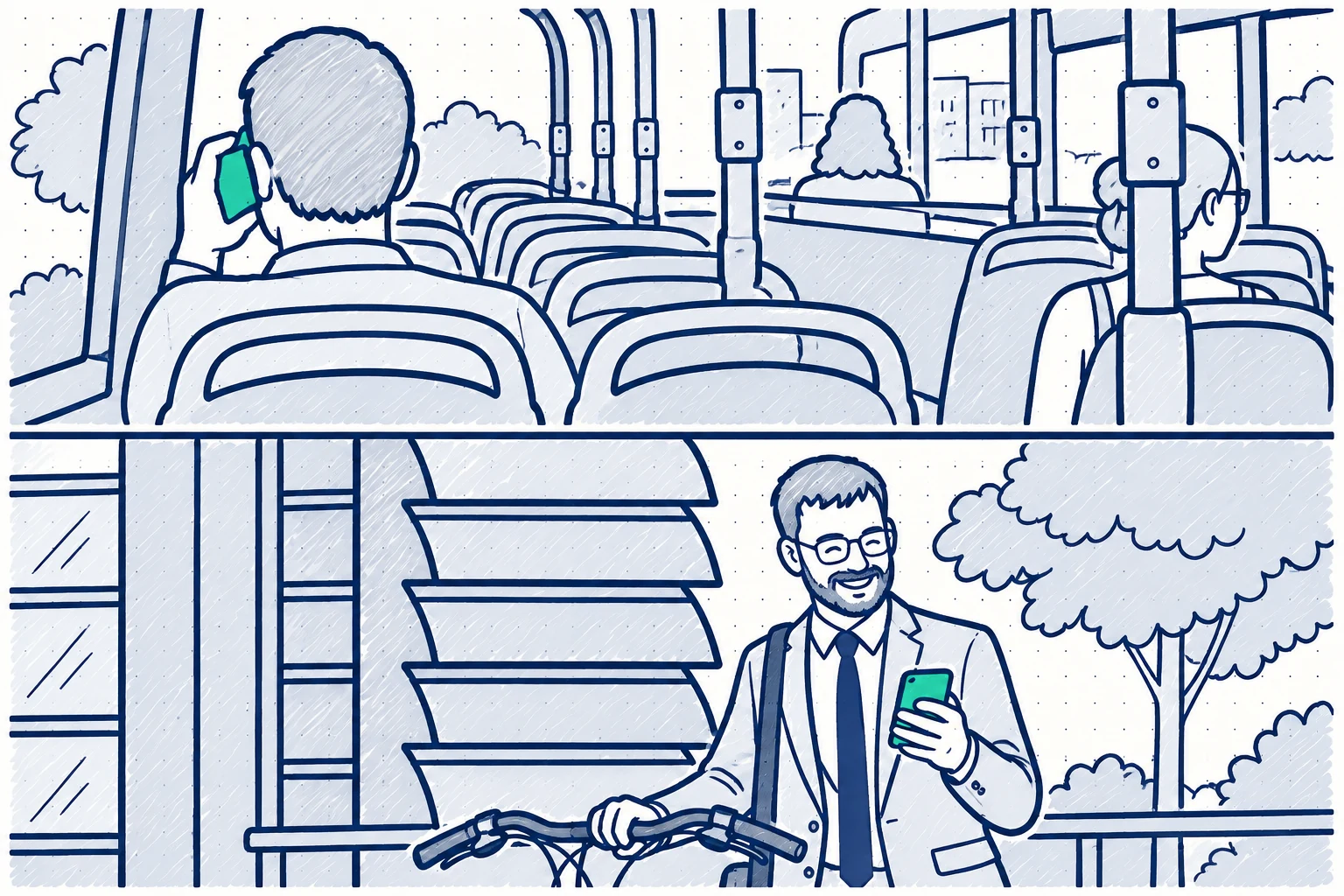
1 Work in pairs. Look at the photos and discuss the questions.

1 What is happening in each photo? 2 Do you use your phone in these situations? 3 What do you think about using your phone in public places?

2 Do the quiz. Discuss your answers with a partner. Are your answers the same or different? Give reasons for your choices.

Do our quiz and check your phone etiquette in public! 1 If you were in a restaurant with friends, and everyone had their phones on the table, what would you do? A I would switch off my phone and put it away. I like to give my friends my full attention. B I would leave it switched on and right next to me on the table - I can't put my phone away for so long! 2 Would you accept a call when you're having a face-to-face conversation with a friend? A No, it's not polite. They could leave a message or I would call the person back later. B I would accept the call - it might be important. 3 What would you do if it was your turn to pay at a supermarket and you were in the middle of a call? A I would end the call and pay attention to the shop assistant. B I would keep talking. I don't think the shop assistant would mind.

4 If you were on a bus and the person behind you was talking loudly on their phone, what would you do?

A I'd ask them to lower his/her voice. B I'd put on my headphones so I couldn't hear his/her conversation.

5 What would you do with your phone if you were at the library and you were expecting a very important call?

A I would make sure I kept it on silent or on vibrate. It's annoying to see screens light up or hear a ringtone when you're trying to study. B I would let my phone ring. I can't risk missing the call.

6 Would you accept a call while you are riding a bike?

A No, I wouldn't. It wouldn't be safe. B Yes, but I would stop and get off my bike first.

3 Look at the underlined phrases from the quiz and discuss the meanings.

4 🎧 6.1 Listen to Part 1 of a conversation between two friends who are talking after they have done the quiz. Are the sentences true (T) or false (F)? Correct the false ones. 1 Hala is talking to her brother on the phone. 2 Hala politely asked someone to speak more quietly on a bus. 3 Nour doesn't like talking to people she doesn't know in public.

The first and second conditionals

5 Read these sentences from the conversation in the recording and answer the questions. Hala: If he doesn't answer, I'll call him later. Nour: If you were in a restaurant with friends and everyone had their phones ...? 1 Is it possible that Hala's brother will answer? 2 What will Hala do if he doesn't answer? 3 Is Hala in a restaurant? 4 Which sentence is about a situation that is likely to happen? 5 Which sentence is about an imaginary situation?

6 Study the Grammar box. Are the conditionals in the quiz first or second conditionals?

The first and second conditionals We use the first conditional for situations in the future that are possible or likely: | The condition | The result | | :--- | :--- | | if + Present Simple, | will + infinitive | We use the second conditional for situations in the present or future that are imaginary, impossible or very unlikely: | The condition | The result | | :--- | :--- | | If + Past Simple, | would + infinitive | We sometimes use were instead of was after I/he/she/it, especially in more formal or written English and to give advice: If I were you, I'd apologise. Grammar Reference > page 69

7 🎧 6.2 Listen to Part 2 of the conversation and answer the questions. 1 What does Hala promise? 2 What will Nour do next time she's at the library? 3 What will Hala do next time she goes into a shop? 4 What does Nour think Hala should do when her phone rings?

8 Match 1-4 with a-d to form four sentences. 1 If you were at a friend's house, 2 What do you think you'll do with your phone 3 I'll switch off my phone immediately 4 What will you do a if someone calls or texts you when you're in the middle of a conversation? b would you turn off notifications so your phone didn't make a noise? c so the light from the screen doesn't distract anyone. d next time you're at the library?

9 Complete the first part of these second conditional sentences with the correct forms of the verbs in brackets. Then finish them so that they are true for you. 1 If I had (have) a lot of money, I'd buy a zoo. 2 If I _ (can) go back in time, _. 3 If I _ (have to) move to another country, _. 4 If I _ (not/have to) study so much, _.

10 Complete the sentences so they are true for you. Try to use some of the underlined phrases from the quiz. 1 I would put my phone on silent if _. 2 I would ask someone to lower their voice if _. 3 It would not be polite to use my phone if _. 4 If someone texted me _, I would __.

□ I can use the first and second conditional to talk about possible and hypothetical situations.

Keep reading this subunit

Sign up free to read the rest of this subunit; we bring you back here.

  • LESSON 1A VOCABULARY AND GRAMMAR
  • The first and second conditionals
Start freeLog in

Last updated:

A preview of “Doing Right Vocabulary and Grammar” from the unit “Do the right thing” in English Language: 3 lesson sections, 3 definitions.

Source: NCCD, 1A Vocabulary and Grammar (pp.6-7)

More in this unit

Continue studying