
تجاوز إلى المحتوى الرئيسي
TawjihiAI: دراسة التوجيهيادرس وتدرّب من هاتفكحمّل التطبيق
Topics

⁦10.3⁩ Food for Thought Grammar

Textbook

From the English Language curriculum

In this topic (2)

I can use modal verbs to speculate about the past.

LESSON 3A GRAMMAR

1 Look at the photo. What kind of salad is it? What are the ingredients? When do you think it was invented?
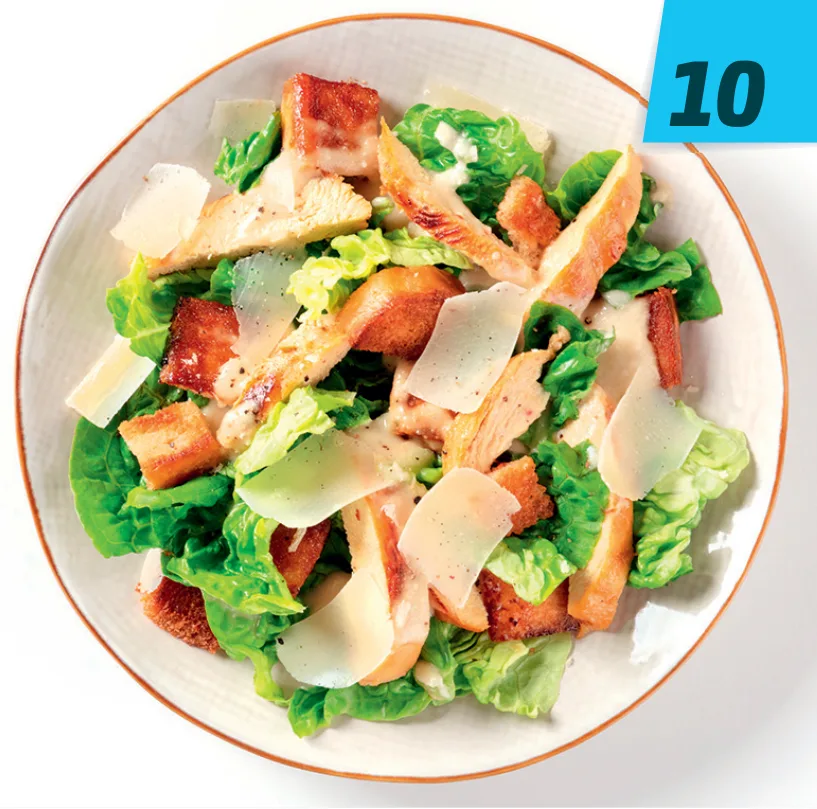
2 10.3 Listen to an interview with a food historian and check your ideas from Exercise 1.

Modal verbs for speculating about the past

3 Complete the explanations of the sentences below with 'It's possible' or 'I'm sure'. Then study the Grammar box and Watch out! to check. 1 Julius Caesar can't have prepared his own food. __ this isn't true. 2 Caesar Cardini may have created the first version. _ this is true. 3 Caesar could have been the first to eat it. _ this is true. 4 His customers must have been really happy. __ this is true.

Modal verbs for speculating about the past To speculate about things in the past we use modal verbs must/could/might/may/can't + have + past participle. must have done = we are sure that something was true/happened can't have done = we are sure that something wasn't true/didn't happen might/may/could have done = it's possible that something was true/happened Grammar Reference > page 73

> WATCH OUT!

We might not have started adding anchovies. NOT We might have not started adding anchovies.

4 Use the correct modal verb in brackets to rewrite these sentences. 1 I'm sure a Roman chef invented the salad. (might/must) A Roman chef must have invented the salad. 2 I'm sure Caesar salad was served in ancient Rome. (can't/must) 3 It's possible that Alex Cardini added anchovies to the recipe. (might/must) 4 I'm sure Julius Caesar didn't eat the modern Caesar salad. (can't/must)

5 10.4 Use can't, must or might to rewrite the sentences. Listen to check. 1 I'm sure that was delicious. That must have been delicious. 2 I'm sure the waiters weren't professionals. 3 It's possible it was her first day in the job. 4 I'm sure they wanted us to be happy.

6 In pairs, make past deductions about these situations. 1 You made a cake but it doesn't taste sweet. can't have used enough sugar. / must have forgotten to use sugar. / might not have put in enough sugar. 2 You put a chocolate bar in the cupboard to eat later, but now it's gone. 3 It's lunch time at school but you can't find your lunch.

7 SPEAKING Tell a partner about a real or invented story about a meal that tasted bad. Then make deductions about what happened. You must have cooked it too long.

□ I can use modal verbs to speculate about the past.

Keep reading this subunit

Sign up free to read the rest of this subunit; we bring you back here.

  • > WATCH OUT!
Start freeLog in

Last updated:

A preview of “Food for Thought Grammar” from the unit “Food for thought” in English Language: 2 lesson sections, 3 definitions, 5 worked questions.

Source: NCCD, 3A Grammar (pp.53-53)

More in this unit

Continue studying
