A lot of the New Year ‘traditions’ in countries like England, Australia and the USA are actually
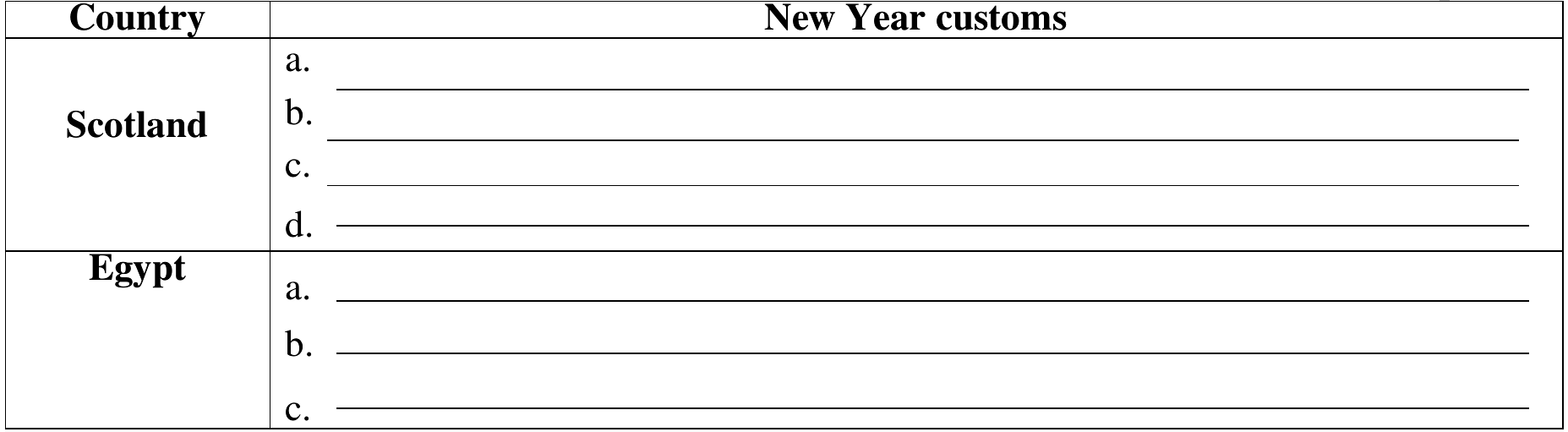
Scottish in origin. These include joining hands and singing the Scottish song Auld Lang Syne (which means something like ‘for the old times’).
Another custom, which is less popular now, is ‘first-footing’. To bring good luck to a house, the first person to visit it (entering by the front door and leaving by the back door) should be a tall, dark haired man carrying a piece of coal for the fire, some salt, some bread and something to drink. These symbolise warmth, flavour and of course food. More generally, it is usual, as in China, to clean the whole house on the day before New Year, and to make sure you have paid back any money you owe to others before midnight.
Like other Muslim countries, Egypt uses the Islamic calendar and the New Year marks the migration
(Hijra) of Prophet Mohammad (ﷺ)from Mecca to Medina. The New Hijra Year can’t begin until the appearance of the new moon of Muharram is officially announced. Although modern technology now makes it possible to find this out well in advance, the new year moon should be observed with the naked eye.
New Year is widely celebrated with visits to family and friends. In many different parts of the country, special religious chanting troupes organise performances in praise of Prophet Mohammad and in commemoration of his Hijra. For many, though, this period is a time for prayer and quiet thought, concentrating on what you have done wrong in the past year and how you need to change in the next.
Whatever culture you look at, there seems to be one idea that underlies many of the New Year customs: the idea of a new beginning, of leaving one period behind and looking forward to the coming one.