Read the text then do the tasks below:
Text A
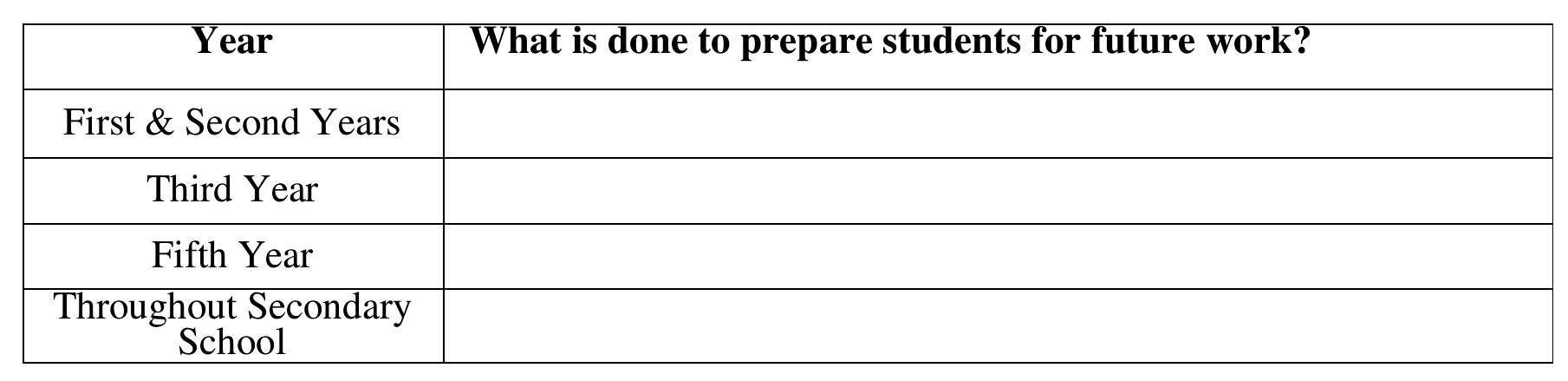
Most schools claim to prepare students for the world of work, but Milton Secondary School takes the claim very seriously. Before they even join the school, future pupils get an informal interview at their primary school to discuss their hopes and preferences for the future.
The emphasis on employment continues during the first two years at Milton, and then in the third year all pupils spend a day doing work experience at a local company. Two years later, this becomes a whole week spent with a company, usually arranged by the students themselves.
Throughout their secondary education, students have professional careers advice, which costs the school over £30,000 a year. Head teacher Harriet Downs believes it's worth it, though: 'Teachers aren't trained as careers advisers,' she says, 'so we bring in professional help. It's part of a co-ordinated programme that aims to make students aware of the employment options available, and how to make the most of them. It's too late to start talking about work in their final year.'
Text B
In a speech yesterday, the Education Minister advised students to avoid arts subjects and choose science or maths if they want to improve their job prospects. In the past, he said, arts subjects like languages and history were chosen by students who didn't have a clear idea of what they wanted to do in the future. He explained that this was because of a feeling that they involved skills that were useful for many different jobs, but he questioned whether this was still true:
'Nowadays, we know differently, don't we? The best subjects for keeping your options open are
ones like science, technology and engineering.'
It quickly became clear that the Minister's words were controversial, with teachers and university heads reacting strongly to his advice. 'Of course science and technology are important,' said one,'but it would be completely wrong to neglect the arts. They provide important skills and an understanding of the world and people in general. Also, the economy depends as much on creativity as on technical knowledge.'